
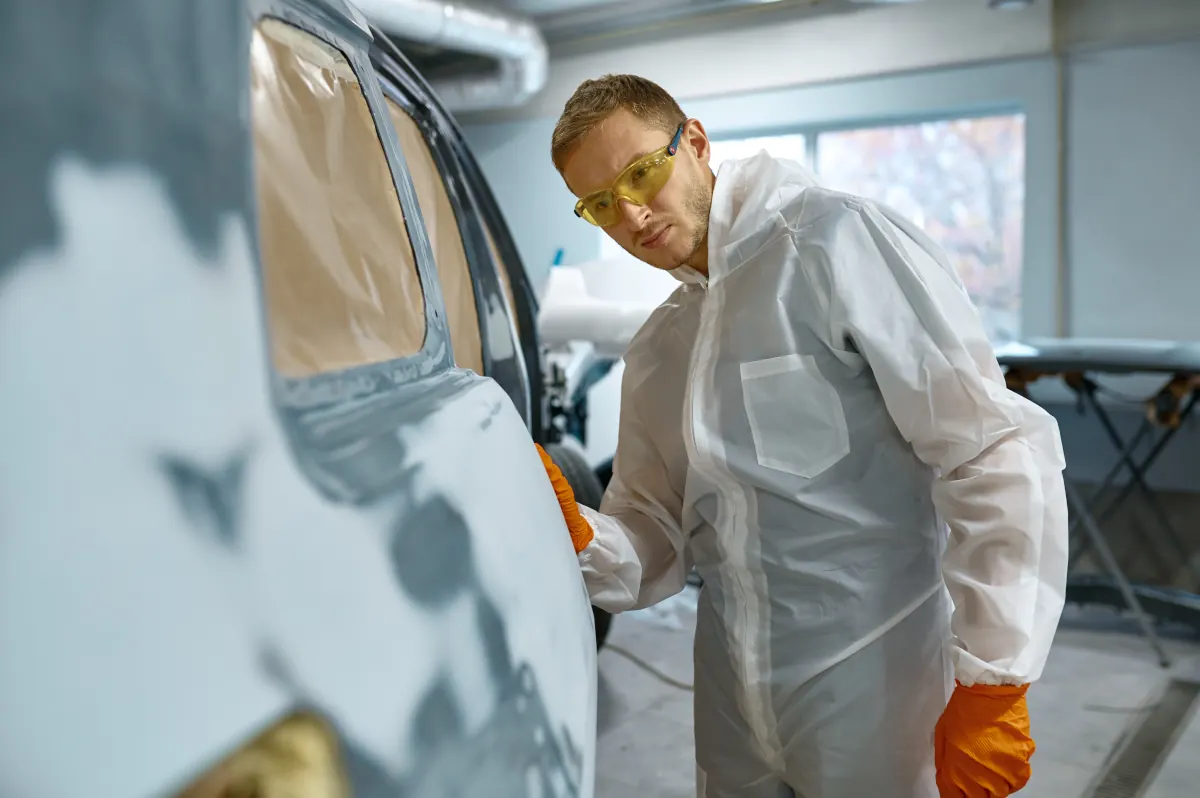
Here in Sonoma County, where our coastal climate can accelerate vehicle rust and where minor fender benders occur year-round, understanding body filler has never been more important. This versatile repair material plays a crucial role in restoring your vehicle's appearance and protecting its structural integrity after damage.
| Body Filler Topic | Key Points |
|---|---|
| Purpose | Fills dents, repairs damage, restores contours |
| Quality Considerations | Premium fillers offer better adhesion, durability, and sanding properties |
| Professional Use | Quality shops use minimal amounts for proper structural repairs |
| Application Process | Requires proper surface preparation, mixing, application, and finishing |
What Exactly Is Body Filler?
Body filler, often referred to by the popular brand name "Bondo," is a two-part polyester compound used to repair dents, dings, and imperfections in vehicle bodies. It consists of a resin base and a hardener that, when mixed, create a chemical reaction causing the material to harden. The resulting substance can be shaped, sanded, and painted to restore a vehicle's original contours.
Modern auto body repair compounds have evolved significantly from the original formulations. Today's premium polyester body fillers contain fiberglass strands or other reinforcing materials that provide greater durability and structural strength. According to I-CAR (Inter-Industry Conference on Auto Collision Repair), proper use of quality body fillers is an accepted industry practice for non-structural repairs [Source].
Body fillers serve as an intermediate step between metal repair and painting. Once applied and shaped, they create a smooth surface that can be primed and painted, effectively hiding the evidence of damage. When properly applied by certified technicians like those at our auto body repair facility, the repair becomes virtually undetectable.
When and Why Body Filler Is Used
The primary purpose of dent repair putty is to restore a vehicle's exterior surface to its factory condition after damage. Professional technicians use body filler in specific scenarios:
- Minor to moderate dent repair – When metal surfaces can be mostly straightened but still have slight imperfections
- Rust repair – After removing rusted metal and treating the area, filler helps restore the original contours
- Panel irregularities – For smoothing seams or minor manufacturing inconsistencies
- Cost-effective restoration – When panel replacement would be prohibitively expensive for minor damage
- Vintage vehicle restoration – When replacement panels aren't available or would compromise originality
Contrary to popular misconception, quality auto body repair shops absolutely use body filler—but with important caveats. Professional shops use it sparingly and only after properly addressing the underlying damage. The key difference lies in application technique, preparation, and the quality of materials used.
For larger vehicles like RVs, proper filler application becomes even more critical due to the expansive surface areas and specialized materials involved. Our technicians apply the same exacting standards to RV repair as they do to passenger vehicles, ensuring structural integrity and longevity.
Types and Quality Differences in Body Fillers
Not all body fillers are created equal. The market offers various formulations designed for specific applications and performance characteristics.
- Standard polyester fillers – Basic formulations suitable for general repairs
- Lightweight fillers – Premium options that are easier to sand and produce less dust
- Fiberglass-reinforced fillers – Contain fiberglass strands for added strength in larger repairs
- Metal-reinforced fillers – Include aluminum or other metal particles for enhanced durability
- Specialty fillers – Formulated for specific materials like aluminum, plastic, or fiberglass
Quality differences between economy and premium body fillers are significant. According to research published in the Journal of Materials Processing Technology, premium fillers typically offer superior adhesion to metal substrates, resist moisture better, and maintain greater structural integrity over time [Source].
The application process itself requires technical precision. After proper surface preparation, the filler must be correctly mixed, applied in appropriate thickness, shaped while partially cured, and sanded to precise contours. This methodical process ensures the final repair meets factory specifications and provides long-lasting results.
The Pros and Cons of Body Filler
When evaluating body filler as a repair solution, several advantages and disadvantages should be considered:
Pros:
- Cost-effective repairs – Significantly less expensive than panel replacement
- Versatility – Can address a wide range of damage types and severities
- Restoration potential – Makes repair possible for vehicles where parts are unavailable
- Time efficiency – When properly applied, reduces overall repair time compared to metal fabrication
- Seamless results – Creates a smooth, undetectable finish when done correctly
Cons:
- Quality concerns – Poor application can lead to cracking, shrinking, or separation
- Moisture vulnerability – Improperly sealed filler can absorb water, leading to deterioration
- Improper use – Some shops use excessive filler instead of properly repairing underlying damage
- Structural limitations – Not appropriate for major structural repairs or high-stress areas
- Reputation misconceptions – Often unfairly characterized as a "cheap fix"
The reality is that body filler, when used appropriately, plays a legitimate role in quality auto body repair. The key distinction lies in how it's used, not whether it's used. As certified technicians, we follow I-CAR guidelines that specify appropriate filler thickness and application techniques.
For customers waiting for vehicle repairs, we understand that convenience matters. While your vehicle undergoes expert body work, our loaner vehicles service ensures you maintain your mobility without interruption.
Body Filler vs. Primer: Understanding the Difference
A common source of confusion is the difference between body filler and primer. While both are part of the repair process, they serve distinct functions in restoring your vehicle's appearance.
Body filler is a thick paste-like compound that fills dents and rebuilds contours. Primer, on the other hand, is a preparatory coating applied over body filler and bare metal to provide a uniform surface for paint adhesion. Primer also offers additional corrosion protection and helps reveal any remaining surface imperfections before final painting.
According to automotive finishing experts at PPG, a proper repair sequence involves multiple steps: damage repair, body filler application, spot putty for minor imperfections, primer application, and finally base and clear coat paint layers [Source].
This methodical approach is what separates professional repairs from amateur work. When body shops take shortcuts in this process, the results often fail prematurely, leading to customer dissatisfaction and potentially dangerous structural compromises.
Purpose
Fills dents, repairs damage, restores contours.
Quality Considerations
Premium fillers offer better adhesion, durability, and sanding properties.
Application Process
Requires proper surface preparation, mixing, application, and finishing.
Pros & Cons
Cost-effective and versatile; improper use can lead to issues like moisture vulnerability.
Ensuring Quality Body Filler Repairs
As vehicle owners in Sonoma County, understanding what makes a quality body repair can help you make informed decisions about your vehicle's care. Professional body filler application should be virtually undetectable and long-lasting, with no evidence of cracking, shrinking, or separation over time.
When evaluating a repair, look for these quality indicators: smooth, consistent finish with no visible seams or texture differences, color matching that blends perfectly with surrounding areas, and proper contours that match the vehicle's original lines. A quality repair should remain stable through seasonal temperature changes and maintain its integrity for years.
At Downtown Collision, our I-CAR Gold Class certified technicians apply body filler with precision and restraint, ensuring structural integrity while delivering flawless cosmetic results. For questions about our approach to body repair or to schedule an assessment of your vehicle's damage, contact our team.
As a partnership-owned business serving our community, we're committed to transparency in our repair processes and to educating our customers about the materials and techniques that go into restoring their vehicles to pre-accident condition.