
If you’ve ever asked yourself, “do I need to wax my car,” the short answer is yes, and the data backs it up. According to Global Growth Insights, 72% of U.S. vehicle owners already use specialized cleaning and protection products as part of their regular vehicle care routine, which tells us most drivers understand something instinctively that materials scientists have proven in the lab: unprotected paint doesn’t last.
We see the results of both approaches every day here in Sonoma County, cars that came in for a fresh coat of protection looking sharp years later, and cars that skipped it looking chalky and tired well before their time.
Key Takeaways
| Question | Quick Answer |
|---|---|
| Do I need to wax my car regularly? | Yes. Wax forms a sacrificial barrier between UV rays, road grime, and your clear coat. |
| How often should I wax? | Every 2 to 3 months for traditional paste or liquid wax. |
| What happens if I never wax? | Oxidation, fading, and micro-scratches accumulate faster, leading to a dull, aged finish. |
| Is ceramic coating better than wax? | Ceramic coatings last longer, but wax is still valuable and more affordable for regular upkeep. Learn more about our ceramic coating services. |
| Does wax protect against summer heat? | Yes. Wax slows UV degradation and reduces heat-related oxidation of the clear coat. |
| Is winter waxing worth it? | Absolutely. Wax repels road salt, moisture, and slush that accelerate corrosion. |
| Does waxing actually protect the paint finish? | Yes, materials science research confirms wax and sealants slow oxidation and UV breakdown of clear coats. |
What Wax Actually Does to Your Car’s Paint
Automotive paint isn’t just color. It’s a layered system, primer, base coat, and a clear coat on top designed to protect everything underneath.
That clear coat is a polymer, and polymers break down under stress. Research published in the Journal of Coatings Technology and Research has documented how ultraviolet radiation breaks the polymer chains in automotive clear coats, causing oxidation, chalking, and reduced gloss over time.
Wax works by adding a sacrificial layer on top of that clear coat. It absorbs the abuse, UV exposure, bird droppings, tree sap, road film, so the factory finish underneath doesn’t have to.
Testing standards like ASTM G154, which simulate accelerated weathering in a lab, are commonly used by coatings manufacturers to measure exactly how much a protective layer slows this degradation. The results consistently show that a waxed or sealed surface degrades slower than bare clear coat.
Who Is Waxing Their Car in 2026?
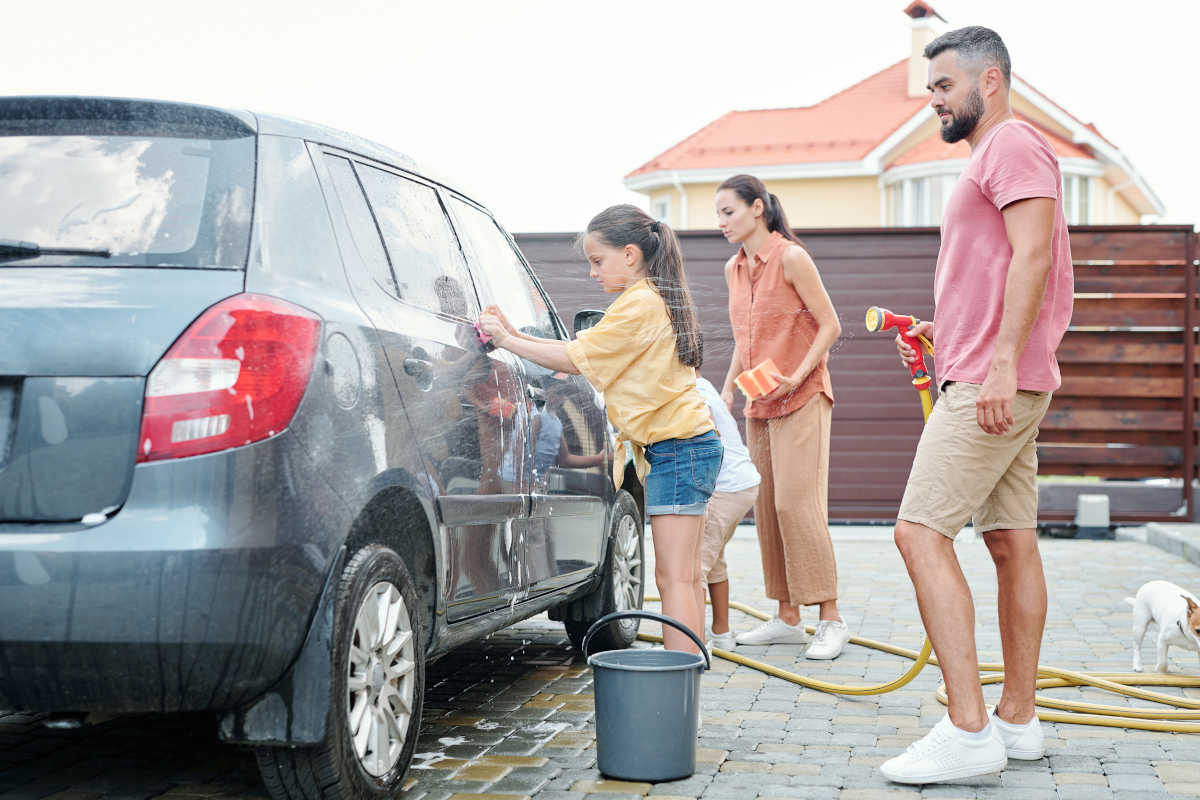
Most drivers aren’t paying a detail shop every month. They’re doing it themselves, on a Saturday morning, with a bottle of wax and a microfiber towel.
A majority of drivers take paint protection into their own hands rather than paying for detailing.
That DIY trend fits with what we see at the shop. Owners who wax car surfaces themselves twice a season tend to walk in for far less paint correction work than owners who never touch a bottle of carnauba.
The Benefits of Waxing Your Car in Summer Heat
Summer is brutal on paint, and not just because of sunburn on your arm out the window.
UV radiation intensifies in summer months, and heat accelerates the chemical reactions that cause oxidation. A wax layer acts like sunscreen for your paint, reflecting some UV energy and slowing the breakdown of the clear coat’s polymer structure.
Here in Sonoma County, cars parked outside near Bodega Bay or driven daily along Highway 101 take on a steady diet of sun exposure. We recommend waxing before the hottest stretch of the year and again mid-season if the car sits outdoors most of the time.
Wax also makes it easier to wipe away bug splatter, tar, and tree sap before they bond to the paint, which matters more in warm weather when these substances soften and adhere faster.
Why Winter Wax Protection Matters Just as Much
Winter doesn’t get the same reputation as summer for paint damage, but it should.
Road salt, slush, and moisture sit on painted surfaces for hours at a time, and salt is corrosive by nature. A quality wax repels water and creates a barrier that keeps salt brine from making direct contact with the clear coat.
Drivers who make the trip up to Healdsburg or through colder mountain passes deal with this constantly. Waxing before winter sets in gives that layer of protection before the roads get treated.
Cold temperatures also make wax application trickier, so we always suggest applying a coat in late fall while temperatures are still workable, rather than waiting until the first freeze.
What Happens If You Don’t Wax Your Car
Skip wax long enough, and the effects show up gradually, then all at once.
First comes a loss of gloss. The paint starts looking flat instead of reflective, because microscopic surface irregularities are scattering light instead of bouncing it back cleanly.
Next comes oxidation, a chalky, dull film that forms as the clear coat’s polymer bonds break down under UV exposure. Left unchecked, oxidation can progress to the point where paint correction or even a repaint is the only fix.
Unprotected paint also holds onto contaminants longer. Bird droppings, sap, and road grime etch into bare clear coat faster than they do into a waxed surface, leaving permanent marks.
Does Waxing Really Protect the Paint Finish? What the Research Shows
This is the question we get asked most, and the science supports a clear yes.
Accelerated weathering studies, the kind that use UV chambers to simulate years of sun exposure in a matter of weeks, consistently show that waxed and sealed panels retain gloss and color longer than unprotected panels. SAE International, the organization that publishes much of the automotive coatings research the industry relies on, has documented similar findings across multiple coating types.
Wax doesn’t make paint indestructible. It slows the rate of degradation, which is exactly what the polymer chemistry predicts it should do.
Think of wax the way sunscreen works on skin: it doesn’t stop aging entirely, but it dramatically slows the damage that accumulates over years of exposure.
Understanding this helps you make informed decisions about your vehicle’s upkeep instead of guessing at whether a $15 bottle of wax is worth the effort. It is.
Traditional Wax vs Ceramic Coatings: Which Protects Better
Wax isn’t the only option anymore, and we get asked constantly whether ceramic coating is worth the upgrade.
Traditional wax typically lasts 6 to 12 weeks before it needs reapplication. Ceramic coatings, by contrast, can last one to several years, which is why adoption has grown among owners who want longer-lasting protection.
We’ve written in detail about how ceramic coatings transform a vehicle’s paint, and the short version is this: ceramic forms a harder, more chemically bonded layer than wax, which is why it holds up better against summer heat and winter road salt alike.
That said, wax still has a place. It’s affordable, easy to apply at home, and gives fresh paint a protective boost between more involved services.
How Often Should You Wax Your Car
There’s no single answer, because it depends on how and where the car is driven.
- Daily commuters parked outside: every 6 to 8 weeks
- Garage-kept vehicles: every 3 to 4 months
- Coastal or high-UV climates: monthly during peak summer
- After a fresh paint job: wait 30 days, then begin a regular wax schedule
If you’re unsure where your car falls, run your palm across the hood after a wash. If it feels rough instead of smooth, that’s usually a sign the old wax layer is gone and contaminants are bonding directly to the clear coat.
It’s Not Just Cars: Waxing RVs and Larger Vehicles Too
Paint protection isn’t limited to sedans and trucks. Fiberglass surfaces on RVs face the same UV and oxidation problems, often at a larger scale.
We’ve explained how RV fiberglass damage develops from prolonged sun exposure, and gel coat oxidation follows the exact same chemistry as automotive clear coat oxidation. Downtown Autobody is proud to be the only recreational vehicle paint facility in Sonoma, and we treat wax and sealant maintenance on RVs with the same seriousness we bring to standard vehicle paint protection.
Warning Signs Your Paint Needs Wax or Professional Attention
A few red flags tell you it’s time to act before small problems become expensive ones.
- Water stops beading and instead sheets flat across the hood
- The finish looks dull or chalky in direct sunlight
- Fine scratches (swirl marks) become visible under bright light
- Contaminants like sap or bird droppings leave a shadow after cleaning
Environmental damage isn’t always weather related, either. We’ve covered this before in our guide to protecting your car from Halloween pranks, since eggs, silly string, and other seasonal mischief can eat into unprotected paint far faster than most drivers expect.
Conclusion
So, do you need to wax your car? Between the materials science on UV degradation and the everyday wear we see on vehicles across Sonoma County, the answer holds up: yes, and consistently, not just once a year.
Whether you handle it yourself with a weekend routine or come see our team for a more durable ceramic option, protecting the paint you already have is far cheaper than correcting the damage that shows up when you skip it. We’re always happy to talk through what makes sense for your vehicle, your budget, and how much time you actually want to spend in the driveway with a buffing pad. Stop by Downtown Collision and we’ll help you figure out the right protection plan.
Frequently Asked Questions
Do I need to wax my car if it already has a clear coat?
Yes. The clear coat is exactly what wax is designed to protect, since it’s the layer most exposed to UV rays and oxidation. Skipping wax on a clear coat finish just means that layer degrades faster than it needs to.
Is waxing my car worth it in 2026 with so many ceramic coating options available?
Wax is still worth it, especially as an affordable, easy-to-apply option between more intensive services. Ceramic coating lasts longer, but traditional wax remains a smart, budget-friendly way to protect paint between coatings.
How long does a coat of wax actually last on a car?
Most traditional waxes last 6 to 12 weeks depending on weather exposure and how often the car is washed. Synthetic sealants can stretch that out to around 4 to 6 months.
Can waxing a car remove existing scratches?
No, wax fills and masks very light surface imperfections but doesn’t remove actual scratches. Deeper swirl marks or scratches need polishing or paint correction before wax is applied.
Does wax really protect paint from sun damage?
Yes, wax slows UV-driven oxidation by acting as a sacrificial barrier over the clear coat. It won’t stop sun damage entirely, but studies on coating degradation confirm it significantly reduces the rate of fading and chalking.
What’s the difference between car wax and paint sealant?
Wax is typically made from natural or synthetic carnauba and offers a warm, deep shine but shorter durability. Sealant is a synthetic polymer that lasts longer and offers slightly more resistance to chemicals and UV exposure.
Should I wax a brand new car right away?
Wait about 30 days after a new paint job or factory delivery before applying wax, since fresh clear coat needs time to fully cure. After that window, starting a regular wax car routine right away helps protect the finish from day one.